
Who is to blame for the hyper-branded, studio-film festival leaving musicians behind?
A stout glass office building looms at the corner of Olympic boulevard in West Los Angeles. Through open concept office space, lounges filled with Herman Miller chairs and walls lined with Billboard magazine covers is a boardroom. It’s in the top corner of the office, with a panoramic view of a city shrouded in smog. This L.A. corner office is 1,400 miles from Austin, Texas. But in it a group of suits will decide the future of South by Southwest.
The now worldwide arts and culture festival launched in 1987 with just around 700 attendees. By 2018, that number grew to 181,000. The festival, not just the guests, grew too. Exploding from a few dozen local names in 1987 to over 2,000 musical acts in 2014. Seven years after it started, SXSW added film and TV to their roster of celebrated art forms. By 1999, the interactive portion of the festival outgrew its shared weekend and became a standalone event, one that drew so much interest in 2009 the city’s cell coverage couldn’t meet the demand.
Cycling through booms and busts of festival portions is part of SXSW’s DNA. Comedy used to happen on just one night. Now it goes throughout the festival and any SXSW staff member will tell you it could soon be its own separate apparatus.

The music festival portion of this parallel-palooza has always been for emerging artists. Over the years, plenty have emerged. Before "MMMBop," Hanson auditioned for execs at SXSW. Death Cab for Cutie and the White Stripes both played SXSW before they officially debuted. James Blunt was discovered here. So was John Mayer.
Festivals get a lot of credit after the fact for bringing in small artists and giving them a platform. But they don’t get a lot of money from it. Big names are big draws. For almost all of SXSW’s history, the music has been about breadth not stardom.
When one dissects the festival into its various parts: film/TV, interactive and music. Music makes the most sense. The city’s expansive network of quality venues weaves a web of parallel concerts for days and days on end. Small bungalows and big lots make house shows a staple. The weather always permits a good time in March. Austin bills itself the “Live Music Capitol of the World.” SXSW Music is the catalyst behind the headline.
This year, March 9th marks the start of SXSW Edu. After that, film, comedy and interactive begin on March 12th. Then on the 18th, when music usually begins, the festival ends.
For the first time, there won’t be a SXSW Music. At least not in the traditional sense. The second weekend of SXSW is usually reserved solely for musicians, but this year the festival is condensed into a single weekend. The decision was announced last year as the 2025 festival ended. But it was set in motion 9 years ago in the offices of Penske Media Corporation.
In 2017, Penske purchased a 50% stake in SXSW. Their controlling interest marked the end of SXSW’s independence and the beginning of a familiar American tale. The dominance of corporate interest, shareholder value and bottom lines over the adorable pluck of flawed entertainment. The irony in SXSW’s glacial decline is their seemingly innocuous enemy. If anyone were forced to take over a music, film and innovation festival who better than a media conglomerate? One who could only benefit from growing the festival, not shrinking it. Who would raise the stature of SXSW, not manage decline. This is not a vampiric venture capital firm looking to squeeze every penny out of a once independent institution, this is a strategic partner with a banal trucking company backstopping its losses. But since that fateful acquisition, Penske has slowly sewed change.
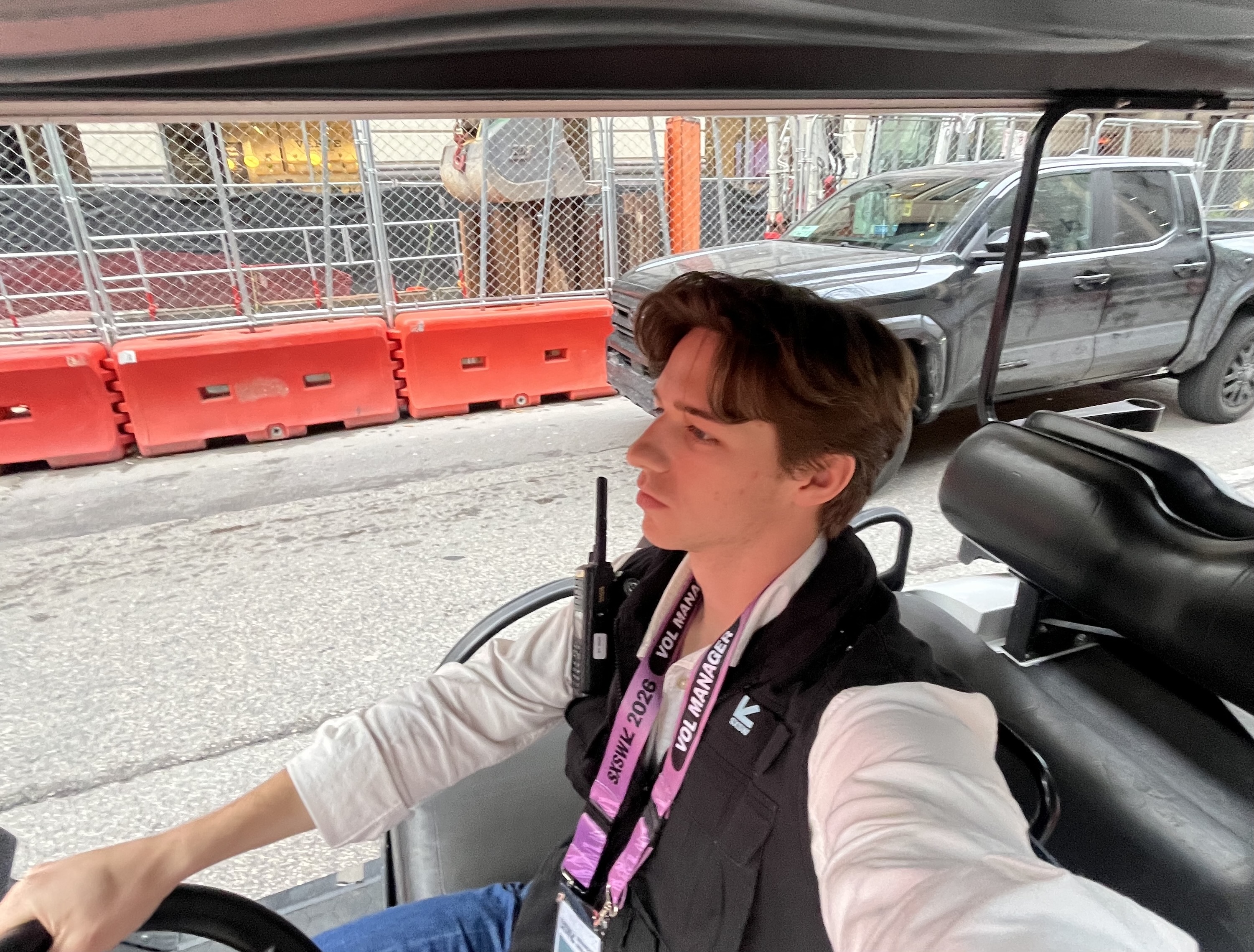
Lines are a staple experience at SXSW. Waiting in them. Bailing from them. Striking up conversation in them. At the pickup line for volunteer credentials in the JW Marriot, the line is abuzz with reflection on past festivals. There used to be an open bar at every volunteer manager event, but today we’re drinking from water fountains and eating soft peppermints. Inside the meeting room a throng of tenured volunteers hears a list of policy updates. There will be no more off-duty free meals. There is no more secondary access for non-platinum badge holders. The volunteer party invite list is shrinking.
But the crowd does not bemoan these changes. They are not uproarious in discontent. Instead they sit quietly. Hands either folded in a lap or firmly on a phone. These are longtime attendees and they have grown accustomed to having their perks stripped away year after year. It’s nothing new.
Something that is new this year: no separate festival for music. Economic impact reports from the City of Austin show the festival returning to pre-pandemic numbers, suggesting that attendance is back on the rise and excitement remains high. That makes the decision to pare the festival all the more curious. Coachella, Tomorrowland and our own Austin City Limits have all made the decision at one point or another to expand into a second weekend due to popularity. It's hard to imagine why a popular festival chooses to contract.
That is where Penske Media Corporation steps in. Those suits in the boardroom from before have one very specific financial incentive. To use SXSW to bolster their portfolio of brands. A portfolio that contains very little music and lots of Hollywood insider trade reporting.

Splashy premieres like 2024’s The Fall Guy or 2018’s A Quiet Place bring in big starts, big media attention and bigger dollars. Having A-List actors stroll down Congress on a SXSW red carpet raises the profile of the festival and in turn generate clicks and engagement with Deadline, Variety and The Hollywood Reporter.
SXSW Music delivers very little for Penske’s bottom line. A big time musician is more likely to be playing outside the festival at the new Sips and Sounds stage (brought to you by Coca-Cola) than at any number of charming, small venues downtown. The best and most accessible portion of this festival constellation is the one that drives the least revenue and therefore matters the least to a company on the other side of the country.
By pivoting toward splashy premieres and red-carpet spectacles, SXSW is attempting to buy its way into the prestige circuit. A strategy designed to feed the Penske ecosystem. But this desperate attempt at Hollywood validation is a fool’s errand. SXSW will never be Sundance, Cannes or TIFF. In trying to force its way into the upper crust of film prestige, the organizers have effectively decimated the music portion—the very thing that made the festival special. Made it unique to Austin.
SXSW is losing what it was to become something it cannot be.